
Political rumors are like coming across a roundabouts: nobody asked for them, nobody knows who started them, and somehow you wind up going going in circles.
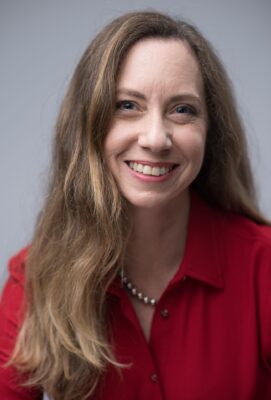
My in-box on the latest bit of City Hall chatter making the rounds is that Irvine Councilmember Kathleen Treseder is allegedly trying to convince former Congresswoman Katie Porter to run for mayor of Irvine. Is it true? Nobody knows for sure. Is it plausible? Sure. Is it politically intelligent? No.
If this rumor is true, it may represent one of the more questionable strategic calculations to emerge from Irvine politics in recent memory.
Let’s begin with the obvious problem: Katie Porter has not exactly been on a winning streak. I voted for her for governor and stand by my vote. I also voted for her in the 2024 senate primary. It’s goddamn shame Katie Porter isn’t in office right now.
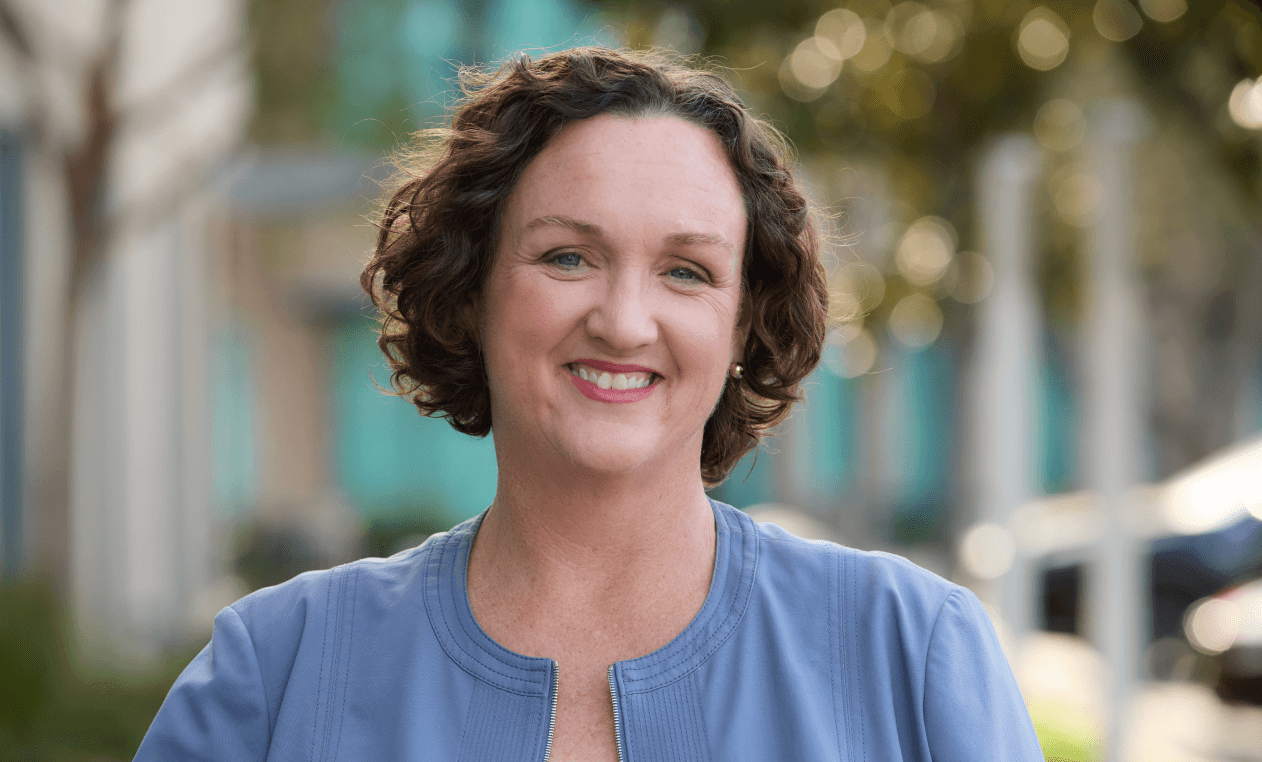
Porter lost her bid for the U.S. Senate in 2024, finishing behind both Adam Schiff and Steve Garvey in California’s top-two primary. She never made it to the general election. Fast forward to 2026 and Porter again sought higher office, this time running for governor. She conceded on election night after failing to advance to the general election.
There is nothing shameful about losing. Plenty of successful politicians lose races. Richard Nixon lost races. Ronald Reagan lost races. Jerry Brown lost races. But there is a difference between losing once and developing a pattern.
If Porter were to run for Irvine mayor, she would effectively be attempting a political reset after two consecutive statewide defeats. That’s not impossible. But it certainly isn’t the kind of resume that screams “unstoppable political force.” Ask Loretta Sanchez how running for Community College Board worked for her. Loretta was the best political endorsement for decades in OC. Then she ran for Senate and lost to Kamala Harris. Then she ran for County supervisor and lost to Don Wagner. And then she ran for Rancho Santiago Community College board and lost. And Loretta remains a friend to this blog but I think her time is better spent in her new endeavors in business. There’s is already a standard for this sort of candidacy.
Why would Kathleen Treseder want to attach herself to that risk?
Political endorsements are investments. Smart politicians invest in candidates who can strengthen their coalition, expand their influence, and deliver wins. Recruiting a candidate who has just suffered back-to-back losses is a bit like buying stock in a company immediately after two earnings disasters and then announcing you’ve found the next tech giant. Maybe you’re a genius. Or maybe you’re about to discover why everyone else sold. The most fascinating aspect of this rumor is what it says about political judgment.
Treseder has often presented herself as one of Irvine’s more strategic and forward-thinking elected officials. Yet if she is genuinely spending political capital trying to recruit Porter, she appears to be focusing on celebrity rather than political reality. Name recognition is not the same thing as electoral strength.
Ask Meg Whitman. Ask Carly Fiorina. Ask any number of candidates who discovered that voters do not automatically transfer admiration for a public figure into actual votes.
Porter remains well known. She remains a skilled fundraiser. She still has loyal supporters. But political gravity is real.
The Senate race showed limitations in her statewide appeal. The governor’s race reinforced them.
A mayoral campaign would inevitably become a referendum not just on Irvine’s future but on Porter’s political comeback. And that’s where the danger for Treseder emerges. If Porter runs and loses, nobody will remember the volunteers, consultants, or donors who encouraged her. They will remember the political figures who championed the effort.
Politics is a results business. A Porter loss would not merely be a Porter loss. It would become evidence that Treseder misread the electorate. It would raise questions about her political instincts. It would provide ammunition for rivals eager to portray her as someone more interested in progressive wish-casting than practical electoral analysis. And let’s be honest: Irvine politics already has plenty of ambitious people waiting for opportunities to question one another’s judgment.
The irony is that Treseder may not actually need Porter at all.
If the goal is to build a durable political movement in Irvine, there are plenty of local leaders, community advocates, commissioners, and emerging candidates who have spent years developing relationships with Irvine voters.
Recruiting a political celebrity after two high-profile defeats can sometimes look less like strategic thinking and more like a search for a shortcut.
Shortcuts rarely end well in politics. Especially in a city as politically engaged as Irvine. Of course, all of this assumes the rumor is true. I’m hoping Porter has no interest whatsoever in running for mayor.
Maybe Treseder never made such an overture. I hope so.
Maybe this entire story belongs in the same category as UFO sightings, secret campaign plans, and every “inside source” who swears they know exactly what is happening. But if the rumor turns out to be accurate, it deserves scrutiny. Because political intelligence isn’t measured by how famous a candidate is. It’s measured by understanding whether that candidate can actually win.
And after two consecutive statewide losses, convincing Katie Porter to jump into another race may not be a display of political genius. It may be an expensive lesson in the difference between name recognition and electoral reality.
Hopefully Porter knows how to balance a checkbook. I won’t worry because the 6.9.2026 meeting agenda has words like “special tax” “fees” and “bonds” in almost every item.
The simple fact that she is a nasty person, and that the personality trait tends to rear it’s ugly head ( no pun intended) at inoprtune times, will keep Katy from attaining higher office. A politician has to be at least marginally likeable to win election. Ask Hillary Clinton..
She’s not a nasty person at all. She’s hard working. And so is her staff. She’s excellent on policy. I just don’t think mayor is what she’s best suited for. I can see her in a number of senior roles in state or federal government
The only thing she knows how to run is her mouth!