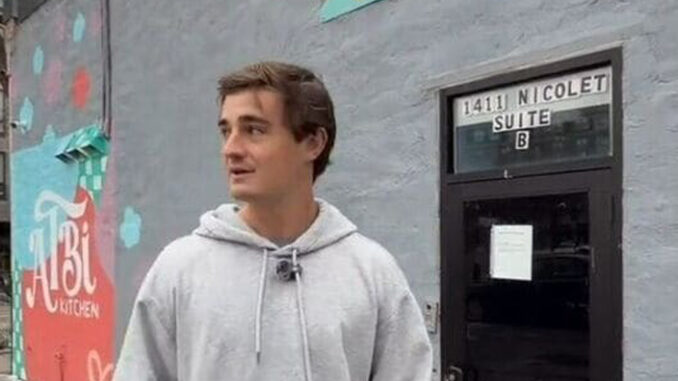
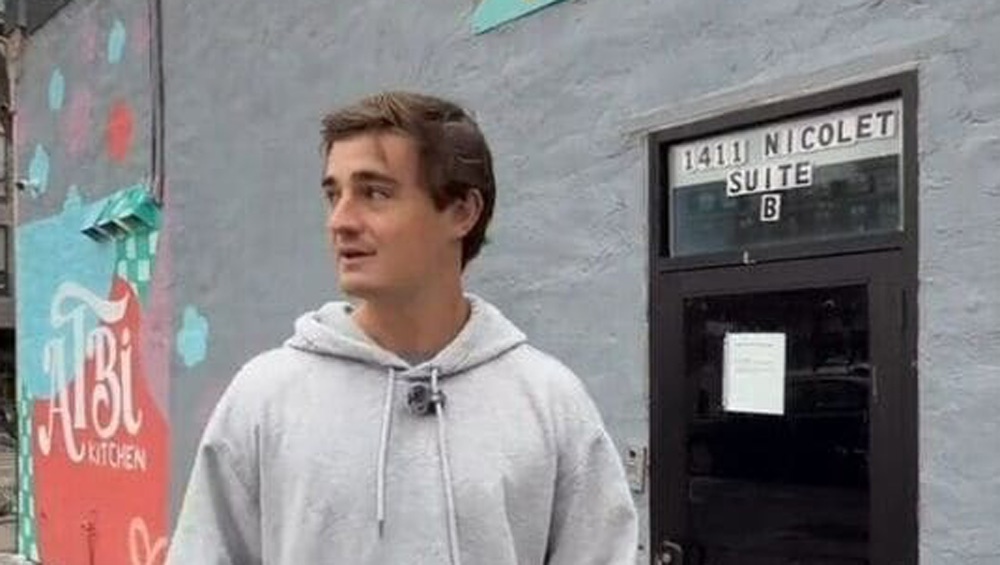
We’ve written about Nick Shirley before — the “independent” journalist who doesn’t follow journalistic standards and demands to see kids in DayCare Centers in Minnesota and California, or wants to sign up a fake grandmother in a nursing home or hospice so he can “report” on that organization’s “fraud.”
The State Legislature is floating a bill (AB2624) that’s designed to augment the privacy and security of immigration support service providers. Republicans are rebranding it the “Stop Nick Shirley Act.” It’s not an official name—it’s a nickname coined by conservative commentators and independent journalist Nick Shirley himself.
Here’s what the Bill actually does:
- Official title: “Privacy for immigration support services providers.”
- Author: Democratic Assembly Member Mia Bonta (with coauthors).
- Introduced: February 20, 2026.
- The bill has been amended a couple of times and advancing through the Assembly (it passed out of committee and was under consideration by the public safety committee).
The bill extends California’s existing “Safe at Home” address confidentiality program designed to protect victims of domestic violence, stalking, and certain healthcare workers since 1999 to people who work or volunteer at “immigration support services” facilities. This includes nonprofits or providers offering legal aid, advocacy, case management, translation services, counseling, healthcare, and other services used by immigrants in California.
- Eligible workers/volunteers can apply to the Secretary of State for a substitute address that state and local agencies must use in public records (their real home address stays confidential).
- It prohibits knowingly posting or sharing (also known as doxxing) a participant’s home address, personal information, or images online or on social media with the specific intent to incite imminent great bodily harm, threaten safety, or enable a violent crime against them or members of their family.
- Penalties include civil lawsuits (damages starting at $4,000, up to triple actual damages), fines up to $10,000 (or $50,000 if injury occurs), misdemeanor or felony charges, and possible jail time. False statements made on applications are also treated as misdemeanors.
- The bill explicitly mentions rising doxxing, online harassment, courthouse targeting, and anti-immigrant vigilante threats against these workers.
There isn’t a single word in the bill that mentions terms like “Nick Shirley, journalism, filming public facilities, or investigations.” It focuses only on protecting personal residential addresses from targeted harassment with harmful intent (similar to laws already protecting other vulnerable groups).
Shirley and Republicans say the bill is a direct response to his work and would criminalize citizen journalism by scaring people away from filming or reporting on these programs—claiming it shields fraudsters and limits First Amendment rights. They say the broad language could lead to lawsuits or prosecutions for simply posting videos that identify individuals. That’s bulshit. Democrats and independent fact-checkers say it’s not about stopping journalism—it doesn’t ban filming public spaces, exposing fraud, or investigative reporting. The bill only kicks in when there’s clear intent to cause imminent harm. The bill has sparked heated debates and national media coverage. If Shirley wants to cover fraud, he ought to start with President Trump who has 34 felony convictions for fraud, and he ought to look at the business his sons are doing with defense contractors and predictive betting markets.
His critics, including local journalists, fact-checkers, and mainstream outlets, who point out significant shortcomings in his approach and claims, particularly regarding the Minnesota investigation. These are framed as failures to adhere to basic journalistic standards such as verification, context, and avoiding preconceived narratives. Shirley visited multiple daycare facilities (around 10–12 sites) and portrayed them as empty or suspicious based on appearances: blacked-out windows, no visible children playing outside in cold weather, unresponsive phone numbers, and staff reluctance to allow entry (no daycare center should allow entry to anyone not on a list of approved visitors!!!) or provide information. He used this to allege millions in fraud with zero proof.
Follow-up investigations by state authorities and local reporters contradicted key visuals:
-
- The Minnesota Department of Children, Youth, and Families visited the sites and stated they were “operating as expected,” with children present at all but one (which hadn’t opened for the day yet).
- Star Tribune reporters visited the facilities and found children present in at least four of them. Some sites Shirley highlighted were already shut down or no longer receiving subsidies; others operated on different schedules or had legitimate reasons for limited visibility (e.g., indoor activities in sub-freezing temperatures or wariness of unannounced visitors amid ICE enforcement concerns).
- No arrests, charges, or prosecutions directly resulted from Shirley’s specific claims or visits. Broader fraud in Minnesota’s program has been real and long-reported by legitimate news outlets like the Star Tribune, KARE 11, and MPR since at least 2015–2016, but Shirley’s video added no new substantiated cases and was accused of recycling known issues without proper context or evidence of criminality at the visited sites.
- The Minnesota Department of Children, Youth, and Families visited the sites and stated they were “operating as expected,” with children present at all but one (which hadn’t opened for the day yet).
Shirley’s Ethical Shortcomings
- Lack of basic verification and due diligence: Critics noted he relied on superficial observations, such as filming exteriors and brief interactions, without records checks, interviews with regulators beforehand, or consideration of alternative explanations. He did not appear to account for operating hours, weather, privacy norms in childcare settings, or cultural/immigrant community dynamics around strangers.
- His work starts with an assumption of fraud and he seeks video to fit it, rather than neutrally investigating. Shirley made a name for himself alleging large-scale fraud in government-funded programs, particularly involving immigrant communities in Minnesota and California. He has since produced inaccurate content on California daycares and hospice centers. He also suggested hundreds of voters were registered fraudentley from an address associated with a single UPS store in San Diego and disgarded the fact the building had tons of apartments above the store with the same address (except for the apartment number).
- Shirley faced interviews where he defended his timing and methods but acknowledged limitations like not entering facilities. Supporters view him as exposing systemic issues ignored by legacy media; detractors call his output low-quality influencer content that misleads audiences and damages reputations without evidence.
- Similar criticisms of rushed or unverified claims have appeared in discussions of his later California videos (daycares/hospice)
So when GOP candidate Steve Hilton praises fraud exposed by Shirley in California, he has no idea what he’s talking about. It’s about building a narrative not backed up by data and one built on lies.