
Back during Primary Season, our friends at the Orange Juice Blog wrote an endorsement for former Irvine resident Mark Newgent who was running for Congress from Texas CD-3. Newgent got crushed in the primary but the endorsement from OJ was really directed at me for losing a lawsuit challenging Newgent’s ballot designation when he last ran for office in Irvine.
We lost that battle but won the war because Newgent admitted to the courts that his PPE business during COVID, for which he was quoted in the OC Register and promoted on Facebook by him as a successful business, was a lie in which he generated no revenue. Voters saw through that and punished him for it. Newgent’s MAGA credentials don’t exactly match OJ’s “progressive” positions and its a good thing Newgent isn’t on the ballot for November.
But making an endorsement of a congressional candidate outside of Orange County was a novel idea by the OJ blog and one I will call attention to here. But for different reasons.
There are congressional races where the candidates spend their time debating taxes, healthcare, agriculture, immigration and infrastructure.
And then there is New York’s 21st Congressional District, where one candidate is a second-generation dairy farmer and the other has released a 20-song rap album thanking Donald Trump.
Welcome to NY-21 in 2026. My hometown of Rome, NY is the largest city in NY21 with about 40,000 people. Rome is where the first shovel of dirt was turned to dig the Erie Canal, the Stars and Stripes flew in the face of the Redcoats at the siege of Fort Stanwix in Rome. That fort was the nation’s largest bicentennial project in 1976 as it was rebuilt to exact measurements on the exact site. Rome was where Alex Haley researched most of his book “Roots” in the early 1970s and then city, knowing he had little money, fed him daily. And the Pledge of Allegiance was written by Rome’s Francis Bellamy, a socialist who has the largest grave in the cementary my grandparents are buried. And the district extends to Fort Drum near Watertown, NY where I had my last radio job as a news director at a country station. The district also is a border district with Canada.
Democrat Blake Gendebien (genda-bean), who operates Twin Mill Farm in Lisbon, NY (about 10 miles from Canada_ is running against Republican Anthony Constantino, the Sticker Mule CEO and self-described political outsider who has made his allegiance to President Donald Trump one of the defining features of his campaign.
It would be easy to dismiss this as another safely Republican North Country district. But that would be a mistake.
Recent polling has put the race considerably closer than the district’s history would suggest. An Impact Research poll conducted Aug. 30-Sept. 2 found Constantino at 47% and Gendebien at 44%, with a ±4.4-point margin of error. A September Public Policy Polling survey found Constantino at 48% and Gendebien at 43%, with a ±4.2-point margin of error. The latest surveys therefore show a Republican lead, but the earlier three-point margin was within that poll’s margin of error.
That is noteworthy because Donald Trump carried this district by roughly 21 points in 2024. And this is the district that sent Elise Stefanik to Congress for years. So how did a district this Red end up with a congressional race close enough to attract national attention?
Part of the answer is the candidates themselves.
For people who don’t know Northern New York, NY-21 is enormous. It stretches across the North Country and Mohawk Valley, includes the Canadian border and encompasses communities ranging from the Adirondacks and Lake George to the Mohawk Valley and St. Lawrence County. Lake Placid and Saranac Lake are here. That matters because the district’s economy isn’t one-dimensional.
Agriculture is a major economic engine, particularly dairy farming. Tourism is enormous, with the Adirondacks and Lake George drawing visitors from throughout the Northeast. Fort Drum is another economic powerhouse. Manufacturing, defense technology and research are important around the Mohawk Valley and the Griffiss complex. Cross-border commerce matters because the district literally touches Canada.
And then there is food processing. Chobani’s planned $1.2 billion dairy-processing facility in Rome is expected to create more than 1,000 jobs and illustrates how modern agriculture works: The economic impact isn’t simply the farmer milking cows. It includes processing, trucking, equipment, manufacturing, construction, logistics and retail. That makes federal agricultural policy particularly important here. (A side note: Rome has a MAGA Mayor who is very pro-Choboni,even though Chobani is one of the most woke companies in the US).
It also makes Gendebien’s background very relevant.
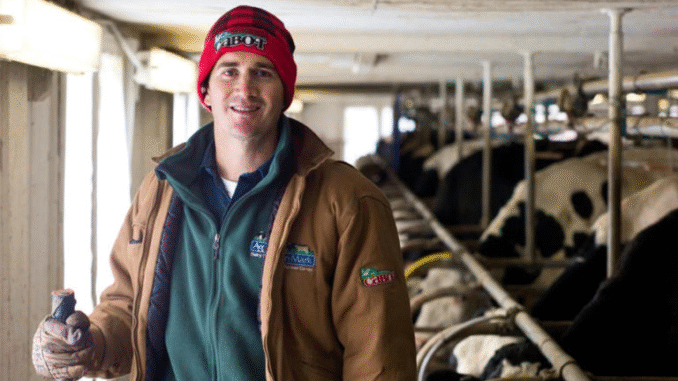
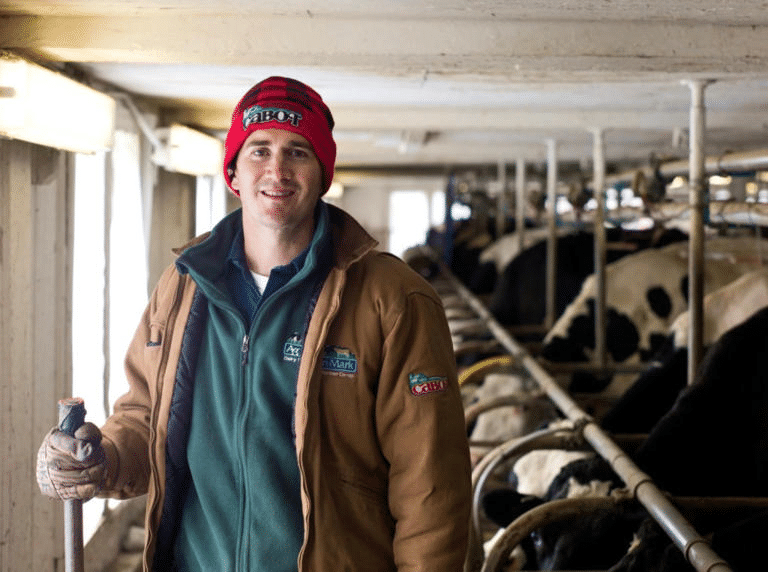
Gendebien is a second-generation dairy farmer. He and his wife, Carmen, operate Twin Mill Farm, where they have built the operation to roughly 500 cattle while farming about 1,200 acres. He knows how to milk cows and clean the barn. Gendebien has callouses on his hands from hard work. He has also served on the Agri-Mark cooperative board and testified before Congress about dairy policy.
That experience doesn’t automatically make him right about every agricultural issue. But it does mean that when Congress starts debating the Farm Bill, dairy margins, farm labor, commodity prices or agricultural trade, he isn’t learning the vocabulary from a briefing book. It’s from actual experience. And that matters well beyond New York.
California’s dairy industry is the nation’s largest, producing roughly 41 billion pounds of milk worth more than $8 billion in 2025. Federal dairy policy therefore affects California farmers just as surely as it affects farmers in St. Lawrence County.
Gendebien has advocated changes to the Dairy Margin Coverage program, including updating production histories so growing dairy farms can receive more appropriate protection. He also supports changes to agricultural immigration programs and argues that securing the border and creating workable legal pathways for agricultural workers aren’t mutually exclusive. That’s an important distinction in a district that borders Canada. His immigration position is essentially: secure the border, enforce the law, but make legal immigration workable — particularly for industries such as agriculture that depend heavily on migrant labor.
Whether voters agree with that approach is a political judgment, but it is a policy position with an obvious connection to the district’s economy.
Anthony Constantino is not your traditional Republican congressional candidate.He founded Sticker Mule and has built a successful business. He is wealthy enough to put enormous amounts of his own money into his campaign — more than $12 million by recent filings. He also has made Donald Trump a central part of his public identity.
Trump endorsed Constantino during the Republican primary, and that endorsement mattered. Constantino defeated Assemblyman Robert Smullen by 19 points in the Republican primary. Smullen subsequently met with Trump and dropped plans to continue the fight on a third-party line. Constantino’s devotion to Trump goes considerably beyond an ordinary endorsement. He put a giant pro-Trump sign atop Sticker Mule headquarters. He has promoted Trump extensively through his company and social-media presence.
And then there is the album. Yes, the rap album. Twenty songs about Trump. And you thought Natalie’s devotion to Trump was creepy.
The Bulwark recently took a wonderfully bemused look at Constantino’s political career and his musical ambitions. Its hosts described him as a “sticker salesman slash rapper.” That’s difficult to improve upon.
Constantino released a 20-song project called Thank You President Trump. The Bulwark discussion highlighted the sheer quantity of Trump devotion contained within it, including multiple tracks titled Thank You Number One, Thank You Number Two, Thank You Number Three and so on. There is even a track featuring Roger Stone, but nothing for Rudy Guiliani, who also supports Constantino.
The Bulwark hosts also had some fun with Constantino’s rhyming, including the observation that one of his lyrical constructions essentially rhymes “New York” with “New York.” This is not ancient history. This isn’t some embarrassing recording from 1997 that a congressional opponent unearthed. This is 2026.
A candidate for Congress in Northern New York has released a 20-song musical tribute to the president while simultaneously asking voters to send him to Washington. You have to admire the commitment. Whether voters consider that commitment admirable, excessive or simply bizarre is another question.
The Internet subsequently received another gift. Constantino posted a photograph of himself petting what he referred to as a “baby cow.” The resulting commentary from people familiar with agriculture was, shall we say, less than charitable. Because in dairy country, a baby cow has a name: Calf.
Calling it a “baby cow” isn’t a crime. It doesn’t demonstrate that somebody is unintelligent. And no, the fate of the republic does not depend upon knowing the correct terminology for a young bovine. But the photograph became political comedy gold because of the opponent standing on the other side of the ballot. Gendebien is an actual dairy farmer. His professional life involves cows. Constantino’s involves stickers.
So when the dairy farmer and the sticker executive are competing for votes in one of New York’s most agricultural congressional districts, and the sticker executive posts a photograph of himself with a “baby cow,” the Internet was always going to have some fun.
The contrast writes itself. And this is where the campaign gets more substantive.
Constantino’s political agenda emphasizes many familiar Republican themes: border security, deregulation, Second Amendment rights, reducing government spending, manufacturing and expanding broadband.
He has also received the NRA’s highest rating for a first-time candidate, while the organization gave Gendebien its lowest rating.
Gendebien, meanwhile, supports protecting Social Security and Medicare, expanding rural healthcare, reproductive rights, agricultural programs, rural broadband and immigration reform that combines border security with expanded legal pathways. He supports restrictions on congressional stock trading and suspending congressional pay during government shutdowns.
So there are genuine policy differences here. But there is another difference in style. Constantino has made Trump central to his political identity. Gendebien has made his North Country biography central to his. That distinction is difficult to miss.
Constantino’s supporters would undoubtedly say there is nothing wrong with a candidate being an enthusiastic Trump supporter. That’s true. Millions of Americans voted for Trump, and NY-21 overwhelmingly did so in 2024. The question isn’t whether Constantino is allowed to support Trump. The question for voters is what they expect their representative to prioritize.
NY-21 has a poverty rate of roughly 14.6%. It has rural communities dealing with healthcare access, aging infrastructure and population loss. Farmers are dealing with labor, commodity prices, trade and input costs. Communities around Fort Drum have an enormous stake in defense policy. Rome and the Mohawk Valley have economic interests tied to manufacturing, technology and federal investment. This is not Washington’s reality-show set. These are real economic problems. And that’s why the Constantino campaign’s obsession with Trump provides such easy material for critics. When you’re running for Congress, it is one thing to say, “I support the president.” It is another thing to spend millions of dollars of your own money on a congressional campaign, erect giant Trump signs, release a 20-song Trump album and build a public persona around demonstrating just how much you love the president.
At some point, voters are entitled to ask: Where does Anthony Constantino end and the Trump fan club begin?
Gendebien has his own political liabilities, and Constantino has been aggressive in attacking him. Constantino has called Gendebien a “fake farmer” and attacked him over immigration, abortion, guns and other issues. His campaign has also promoted recordings and allegations intended to portray Gendebien as more liberal than his campaign presentation suggests.
Gendebien is running as a moderate Democrat in a district where that matters. His campaign emphasizes his agricultural background, rural roots and North Country identity. He has received endorsements from organized labor and other Democratic-aligned organizations, including NYSUT and the New York State AFL-CIO. His campaign has also raised substantial grassroots money. In the second quarter of 2026, it reported raising more than $804,000, with an average contribution of $38 and more than 79,000 total donors.
That provides a striking contrast with Constantino’s ability to self-finance. One candidate can spend millions because he has millions. The other is building a campaign around tens of thousands of relatively small contributions.
For a district on the Canadian border, immigration is more than a national cable-news argument. Border security, legal immigration, agricultural labor and cross-border commerce all have direct implications. Gendebien’s approach is to combine stronger border enforcement with expanded legal immigration channels and reforms to agricultural worker programs. Constantino takes a much harder-line approach emphasizing border security and restrictions on illegal immigration. Again, voters can decide which philosophy they prefer.
But there is an interesting irony here. A district that borders Canada, depends on agriculture and has an enormous need for seasonal farm labor may have something to gain from a representative who understands the difference between illegal immigration and legal agricultural workers. That is a policy discussion worth having. It is probably more useful than another rap song.
Let’s be clear about what Gendebien is trying to do. This isn’t a blue district. Elise Stefanik represented NY-21 for years, and Donald Trump carried it by roughly 21 points in 2024. Republicans have dominated the district. And yet the latest polling has produced a race close enough to demand attention.
The September Impact Research poll had Constantino ahead by just three points, 47%-44%, within the poll’s ±4.4-point margin of error. The September PPP survey had Constantino ahead by five points, 48%-43%, with a ±4.2-point margin of error. That does not mean the race is tied. It does mean that the traditional political assumptions about NY-21 aren’t sufficient to explain the current contest.
The district remains Republican-leaning. But the polling has shown a competitive contest rather than the kind of runaway Republican margin the district’s 2024 presidential vote might have suggested. And that’s what makes this race worth watching.
Ultimately, the 2026 NY-21 race presents voters with two unusually different candidates.
Blake Gendebien is a dairy farmer who has spent his adult life in the North Country, has operated a family farm and has firsthand experience with the agricultural policies Congress routinely debates.
Anthony Constantino is a successful businessman who has demonstrated an extraordinary willingness to spend his personal fortune on politics and has made his support for Donald Trump one of the most visible features of his campaign.
One talks about dairy margins. The other has a Trump rap album. One knows a calf because he raises them. The other has now provided the North Country with an immortal photograph of himself petting a “baby cow.” One is talking about agricultural labor policy that could affect farmers from St. Lawrence County to California’s Central Valley. The other is still saying thank you to Donald Trump — apparently all the way through song number 20.
And that may be the central question of NY-21. Does the district want a representative whose identity is rooted primarily in the North Country, or one whose political identity is deeply intertwined with Donald Trump? The voters of NY-21 get to decide.
I urge OC’s Democratic Congressional delegation to endorse Blake Gendebien for Congress in NY 21. And how about it OC, can you send a few bucks to his campaign? Here’s how you can help.
Blake Gendebien’s campaign website is Blake Gendebien for Congress. The campaign currently provides an online donation option through ActBlue.
The campaign’s official site currently lists contribution buttons for:
- $5
- $10
- $25
- $50
- $100
- Other amount
Donations are processed through ActBlue, and the campaign identifies the committee as Blake for The North Country.
Donate directly: Blake Gendebien campaign donation page
The campaign’s website also has sections for Blake’s biography, issues, news, endorsements, media and ways to get involved, so readers can review his positions and campaign information before deciding whether to contribute.
Blake’s campaign reported raising more than $804,000 in the second quarter of 2026, with more than 79,000 total donors and an average contribution of $38.
Because campaign contribution limits and eligibility rules apply, donors should review the information presented on the ActBlue contribution form before giving.
Leave a Reply